
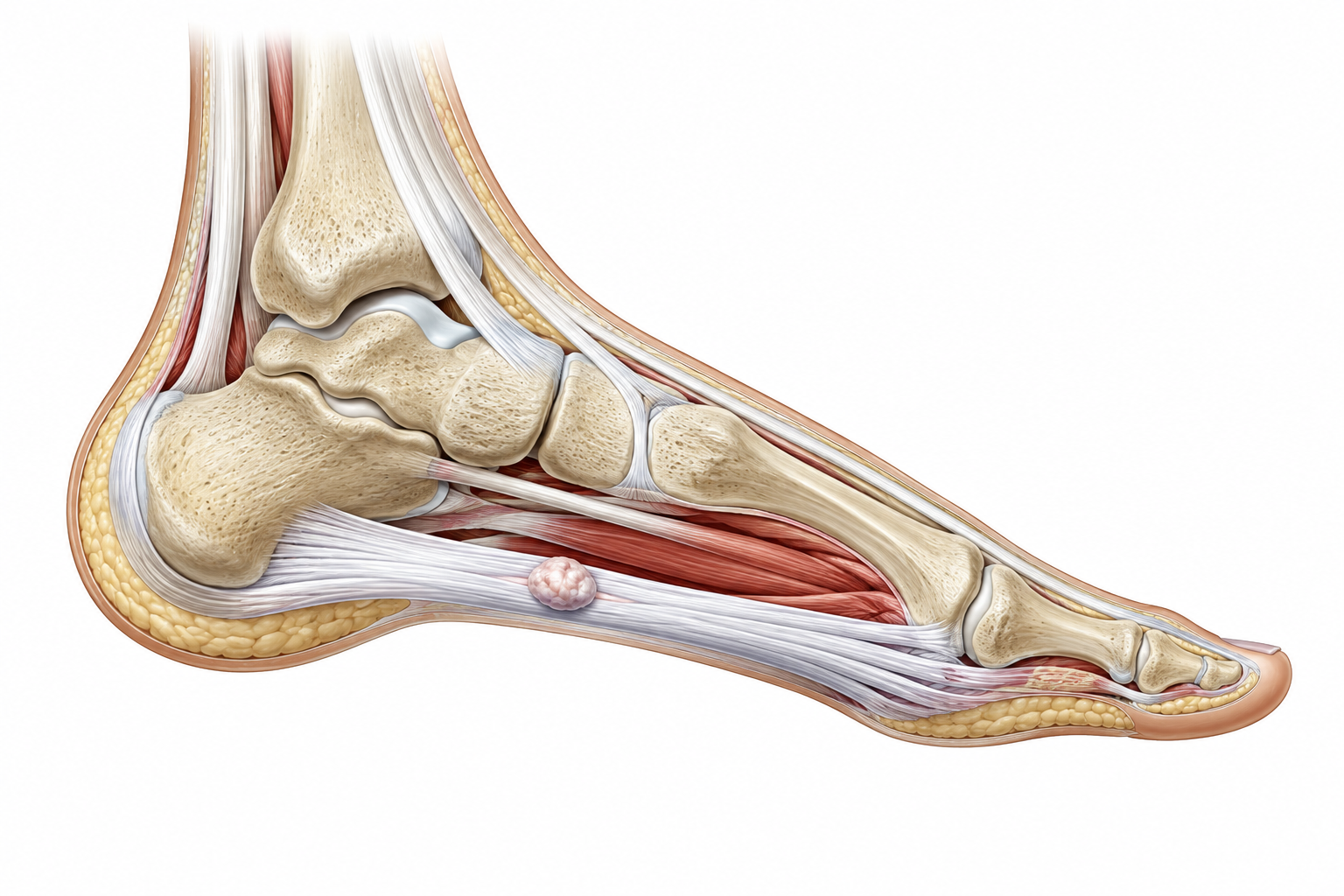
Plantar fibromas are benign but stubborn nodules that grow in the arch of the foot, within the plantar fascia. They can be painful, and when non-surgical treatments fail, surgical removal is one of the few remaining options. The problem is that these growths often come back after surgery. A 2018 study published in the Journal of Orthopaedic Research looked at a simple way to lower that recurrence risk.
What the study looked at
The researchers wanted to know whether applying Mitomycin C — a medication already known to slow the growth of fibrous tissue — directly to the surgical site could stop plantar fibromas from returning. They reviewed 50 patients treated over a 16-month period and split them into two groups:
- Control group (29 patients): surgical removal only.
- Study group (21 patients): surgical removal plus a topical Mitomycin C treatment applied to the wound bed.
What they found
The difference between the two groups was striking:
- In the surgery-only group, 17 of 29 patients (about 59%) had the fibroma return, on average within about nine months.
- In the Mitomycin C group, none of the patients had a recurrence.
- No complications, side effects, or wound-healing problems were linked to the Mitomycin C.
Why it matters
Recurrence is the biggest frustration in treating plantar fibromas surgically. These early results suggest that a short topical Mitomycin C application at the time of surgery may sharply reduce the chance of the growth coming back — without adding meaningful risk. The authors note this is a smaller, retrospective study, so larger trials would help confirm the findings, but the outcome is promising for patients who have exhausted other options.
Read the full study
This article is a summary for general information. For the complete research, methods, and data, read the original paper published by the Journal of Orthopaedic Research:
Disclaimer: This post is for informational purposes only and is not medical advice. Consult a qualified healthcare provider for diagnosis and treatment.